

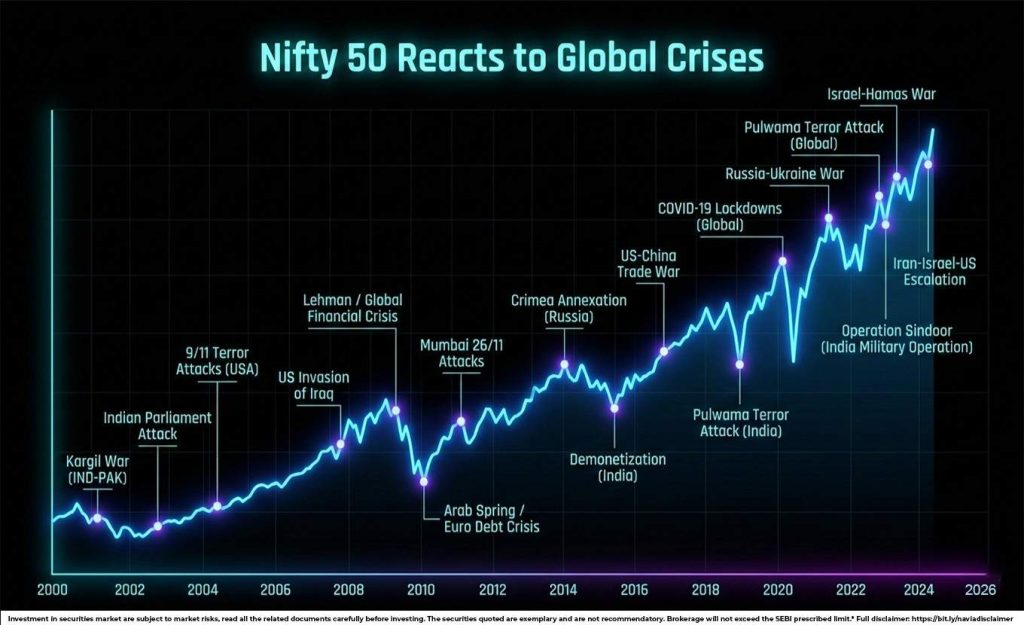
The Intertwined Nature of Borderless Capital
Domestic financial markets no longer function inside an isolated bubble. Because modern investment systems operate across a completely digital and boundaryless infrastructure, macroeconomic news originating in one corner of the globe transfers into local pricing systems almost instantly. Whether it is an unexpected interest rate modification by Western central banks or an energy supply disruption across Eastern trading corridors, these international catalysts dictate the choices made by major institutional fund managers. For standard market participants trying to preserve and expand their capital, mastering how global risk appetite influences domestic valuations is no longer just an optional academic exercise. It is a fundamental component of structural risk mitigation.
Early Cues and the Role of Extended-Hour Asset Tracking
Before local trading floors formalize their opening parameters at the morning bell, global investors actively react to macroeconomic data streams through offshore derivative networks. Historically, the benchmark known as the SGX Nifty acted as the primary vehicle for cross-border institutional capital to project and hedge exposure to Indian large-cap equities. Trading via the Singapore Exchange across extended international time windows, the SGX Nifty registered real-time sentiment changes from institutional desks while domestic trading floors were physically locked.
Even though the operational setting has progressed into specialized economic zones within India under the Gift Nifty moniker, studying the historical behavior of the SGX Nifty contract remains crucial for understanding modern market frameworks. Observing these off-hours movements tells a clear story about how foreign institutional players are pricing in late-night international news long before local orders can execute.
The Mechanical Reality of Domestic Value Tracking
Once the local stock exchange opens its doors for standard trading hours, cross-border sentiment directly influences the underlying valuations of the top fifty blue-chip enterprises. Tracking fluctuations in the nifty 50 share price metrics provides market participants with a clear view of how these corporate leaders are executing operations under current macroeconomic pressures.
The Flow of Sentiment:
Overnight Global Data ──> Offshore Price Adjustments ──> Morning Domestic Execution
Because this domestic benchmark uses a free-float market capitalization formula, a sudden change in foreign institutional positioning rapidly shifts the daily nifty 50 share price trajectory. When global conditions encourage a risk-on attitude, foreign capital floods into these highly liquid large-cap stocks, driving up individual equity valuations significantly. Conversely, when macroeconomic fears dominate international markets, an organized exit of foreign portfolio investments can quickly depress the broad nifty 50 share price framework, independent of local corporate performance.
Identifying True Structural Trends Amid Everyday Market Noise
The real strategic edge for individual wealth builders lies in contrasting early pre-market signals with actual on-the-ground price action. A significant divergence between the historical trends of the SGX Nifty framework and live market data can reveal key institutional turning points. For example, if an international market drop points to a steep down-gap at the open, but local buying support emerges immediately during the first hour of trading, it indicates that domestic mutual funds are absorbing the foreign selling pressure.
Developing a multi-layered analytical checklist that monitors global flows prevents retail traders from falling into emotional traps during volatile market updates. Integrating these distinct layers of market data allows investors to make logical decisions rooted in macroeconomic realities rather than panicking over short-term statistical anomalies.
Building an All-Inclusive Analytical Safety Net
In the modern financial world, achieving long-term capital appreciation requires constant adaptation to global macroeconomic realities. Relying exclusively on localized indicators while ignoring cross-border data streams can create massive blind spots in an investor’s portfolio strategy.
People develop a thorough understanding of the market by constantly tracking early indicators such as the SGX Nifty derivatives in addition to the ongoing fluctuations of the local Nifty 50 share price. An investor can handle volatility with complete certainty and accuracy thanks to this methodical, multi-index technique, which ensures that sudden changes in the world never catch them off guard.
